Maritime Monster All Jobs Moored Here
https://maritime.monster/wp-content/uploads/2026/02/trisha-kerstin-3-fatalities-pcg-717e08-b20637-1.jpg
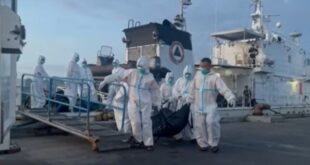
Three additional bodies of victims from the lost ferry Trisha Kerstin 3 have been recovered near Basilan, bringing the number of confirmed fatalities to 40 people, the Philippine Coast Guard confirmed on Sunday. The bodies were found in the water near Baluk-Baluk Island and Lantawan Island, not far from the site of the sinking. One of the deceased was a servicemember, Coast Guard Seaman Alkhaizar Hadjail. “Our fallen coast guard [servicemember] will always be remembered for his selfless dedication and commitment to public service, exemplifying courage and professionalism in the line of duty,” the PCG said in a statement. Taken together, the total count of survivors and fatalities indicate that at least 356 people were aboard the ferry when it went down, and possibly more. This is more than the number of people on the initially reported passenger and crew manifest, raising questions about whether there were off-books passengers on board on the casualty voyage. Carrying informal passengers in excess of the documented number is common in Southeast Asia, and can create hazards. The ferry Trisha Kerstin 3 departed Zamboanga City on January 25, headed for Jolo, Sulu. At about 0150 hours on Monday morning, the vessel capsized and went down off Baluk-Baluk Island. 316 passengers and crewmembers were rescued, and the count of confirmed deceased has continued to rise over the course of the week. An investigation into the cause of the casualty is under way. According to maritime agency MARINA, there are early signs of “serious violations” involving the operating company, which has had more than 30 incidents in recent years – including the loss of two other ships in the same region. Stay on Top of the Daily Maritime News The maritime news that matters most Get the latest maritime news delivered to your inbox daily. Subscribe Now // Global validation function (only defined once) if (!window.validateEmailSignupForm) { window.validateEmailSignupForm = function(form) { const input = form.querySelector(‘.email-signup__input’); const email = input.value.trim(); input.classList.remove(‘error’); if (!email || !email.includes(‘@’) || !email.includes(‘.’)) { input.classList.add(‘error’); input.focus(); return false; } return true; }; } // Fetch fresh CSRF token for all forms (only once) if (!window.csrfTokenFetched) { window.csrfTokenFetched = true; fetch(‘/csrf-token’) .then(r => r.json()) .then(data => { document.querySelectorAll(‘.email-signup input[name=”_token”]’).forEach(input => { input.value = data.token; }); }) .catch(() => {}); } // Unique callback for this form instance window.submitEmailSignup_email_signup_697fec2c3b8ba = function(token) { const form = document.getElementById(’email-signup-697fec2c3b8ba’); if (window.validateEmailSignupForm(form)) { form.submit(); } }; Among the more unusual allegations, MARINA spokesperson Dir. Luisito delos Santos said that there are indications that the vessel herself may have been switched out for the voyage. In addition, some survivors have reported a shortage of life vests, and that some of the vest storage compartments were locked. All of the operator’s vessels have been issued no-sail orders until inspections are completed, and other firms have been licensed to operate its routes.
Original article available on the page of publisher.
ARTICLE LINK: maritime-executive.com