Maritime Monster All Jobs Moored Here
https://maritime.monster/wp-content/uploads/2026/05/uss-wasp-emergency-generator-maintenance-usn-0ad4fd-1.webp
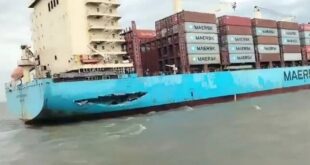
After the loss of power leading up to the MV Dali / Francis Scott Key Bridge strike, marine casualty investigators noted an extended delay in the automatic startup of the ship’s emergency generator. While the small generator was not sufficient in itself to run most major systems, it could provide low-speed hydraulic power to turn the rudder slowly – and could have provided that vital capability much sooner if it had started within standard time parameters, illustrating the importance of automated emergency power startup. After the casualty, the National Transportation Safety Board asked the International Association of Class Societies to review emergency generator startup with members. Separately, the Tokyo MoU also raised concerns about the reliability of standard generator startup testing procedures involving “simulated blackouts.” In response to the PSC inspection MoU’s request, IACS completed a fleet-wide review via a concentrated inspection campaign, the organization announced Tuesday, and it uncovered a small but meaningful number of deficiencies. Out of about 37,000 ships inspected across the global fleet, no issues were found with emergency power supply systems in about 98 percent of all cases. The remaining two percent – about 850 ships – showed a pattern of issues that IACS plans to incorporate into its compliance guidance. Critical and recurring points of failure included: – Closing quick-closing valves (22 percent of deficiencies) – PCB control circuits (16 percent) – Emergency diesel generator starting arrangements (14 percent) “These failures indicate industry-wide issues with equipment maintenance, installation quality, or component durability,” IACS warned – raising the risk of noncompliance. Stay on Top of the Daily Maritime News The maritime news that matters most Get the latest maritime news delivered to your inbox daily. Subscribe Now // Global validation function (only defined once) if (!window.validateEmailSignupForm) { window.validateEmailSignupForm = function(form) { const input = form.querySelector(‘.email-signup__input’); const email = input.value.trim(); input.classList.remove(‘error’); if (!email || !email.includes(‘@’) || !email.includes(‘.’)) { input.classList.add(‘error’); input.focus(); return false; } return true; }; } // Fetch fresh CSRF token for all forms (only once) if (!window.csrfTokenFetched) { window.csrfTokenFetched = true; fetch(‘/csrf-token’) .then(r => r.json()) .then(data => { document.querySelectorAll(‘.email-signup input[name=”_token”]’).forEach(input => { input.value = data.token; }); }) .catch(() => {}); } // Unique callback for this form instance window.submitEmailSignup_email_signup_69fa656a41a5d = function(token) { const form = document.getElementById(’email-signup-69fa656a41a5d’); if (window.validateEmailSignupForm(form)) { form.submit(); } }; Inspectors also found deficiencies in administrative controls and human factors – like a lack of blackout testing procedures in the company SMS, or crew unfamiliarity with the emergency diesel generator and its controls (12 percent of deficiencies). IACS plans to review and address the findings. It advises that ISM audits should include a realistic test of emergency diesel generator functionality and the operation of the emergency power system as a whole. For frequently-failing components, IACS plans to review its test-and-inspect cycle times in order to catch broken parts sooner.
Original article available on the page of publisher.
ARTICLE LINK: maritime-executive.com