 Maritime Monster All Jobs Moored Here
For more than a century, you could gauge the state of the marine salvage industry by the number of Lloyd’s Open Form (LOF) cases.Donjon Marine
A simplistic explanation of a typical LOF case is a vessel calling a salvor to perform a rescue operation. The agreement constitutes a blank check for the salvor to provide whatever equipment, labor and services necessary to complete the operation. Known familiarly as a “no cure, no pay” contract, the operation must first be completed, and an arbitrator then reviews the case and decides on the appropriate billable amount for the services provided.It’s been just over a year since U.S.-based Donjon Marine was acquired by the private equity Tallvine Group, and Donjon CEO John Witte, Jr. says it’s more like a partnership than an acquisition. Tallvine and Donjon have since added a West Coast affiliate and are looking at another “bolt-on” towing organization on the Gulf coast.
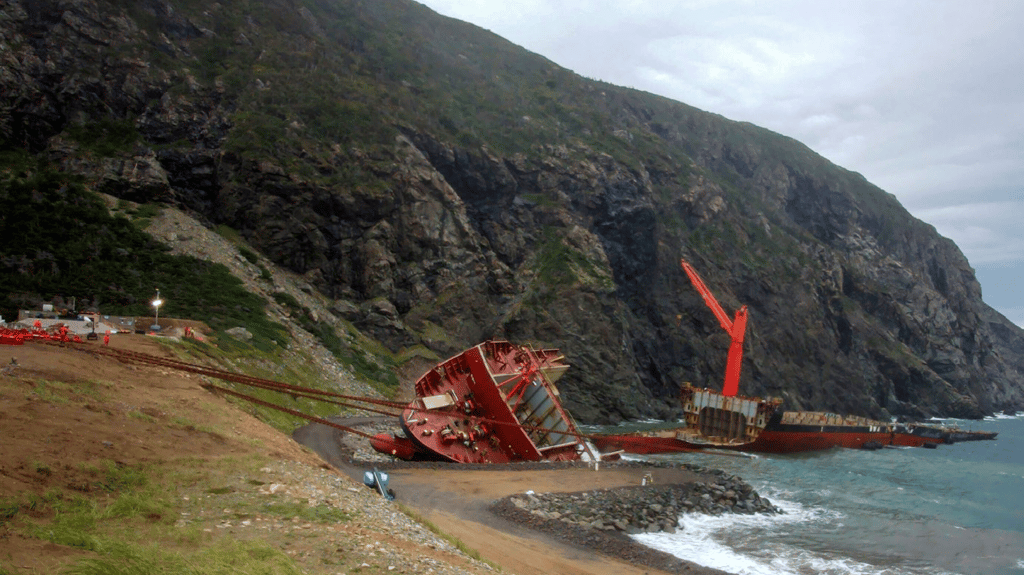
Salvors take most of the financial risk while vessel owners have a mechanism for the rapid initiation of emergency services. Historically, the annual number of LOF cases was the best measure of the health of the marine salvage industry. For the past two decades, however, this number has been in sharp decline. Yet salvors like Donjon Marine, Resolve Marine, Global Diving & Salvage and Vanguard Tech have expanded their services far beyond LOF cases. 2026 has demonstrated that marine salvage is a strong, healthy industry that includes oil spill response, lightering, vessel removal, towing, firefighting and an ocean of other emergency services.Thus far in 2026 the industry has not had a major rescue operation like the Costa Concordia, Key Bridge collapse in Baltimore or Golden Ray. “Our salvage work to date in 2026 has involved removal of numerous hazards in support of the U.S. Corps of Engineers and the U.S. Navy, small barge salvage, emergency towing and other localized events,” Witte explains.
(Article originally published in Sept/Oct 2026 edition.)Stevedoring and construction support work may not be the first things that comes to mind when thinking about salvage, but they’re keeping Donjon busy as port infrastructure continues to grow and change. Vessels are built larger with more variation in cargoes, resulting in the industry-wide need for upgrading standard salvage assets.
FULL ARTICLE AVAILABLE HERE: maritime-executive.com